What Is a Marketing Funnel? Best Simple Guide for 2026
Every business wants more customers. But most skip the journey that turns a stranger into a buyer. That journey has a name — and understanding it is one of the smartest investments you can make.
Whether you run a small shop or a growing agency, a clear framework helps you guide people from first awareness to final purchase without wasting effort.
What Is a Marketing Funnel?
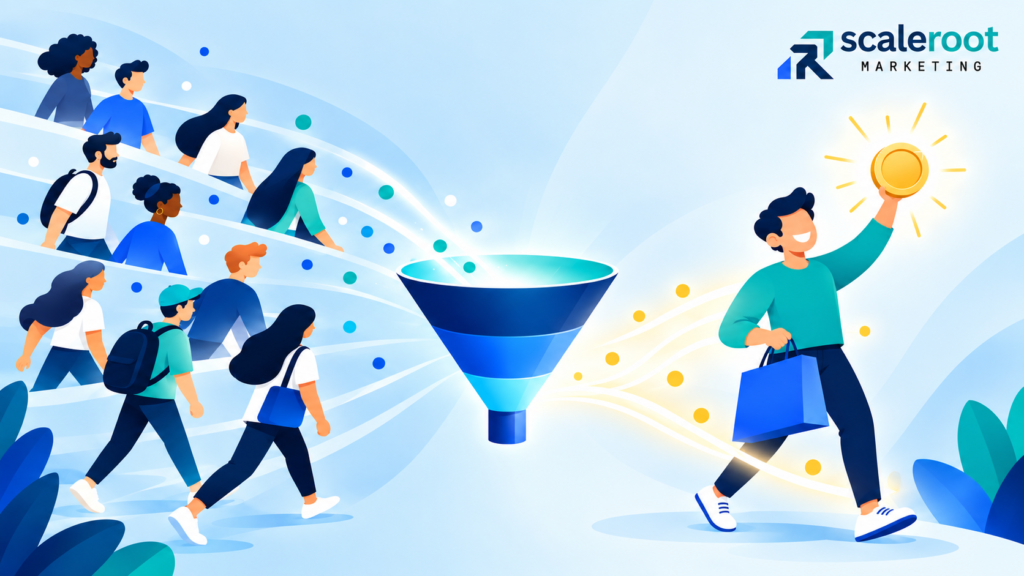
A marketing funnel is the step-by-step journey a person takes from first discovering your brand to becoming a paying customer. The word “funnel” reflects shape: many people enter at the top, fewer move down, and only a portion convert at the bottom.
It is not a physical tool. It is a framework that maps how buyers think, feel, and act at each stage. With a well-built funnel, you know exactly what message to send and when.
Many enter. Few convert. Strategy decides how many.
The Four Stages
1. Awareness — “I have a problem”
People first learn you exist. They see your ad, read your blog, or hear about you from a friend. Your job here is attention and reach.
Goal: Get noticed by the right audience.
2. Interest — “I want to learn more”
Now they explore. They read reviews, compare options, and follow your social pages. Your job is to build curiosity and trust.
Goal: Educate and engage.
3. Decision — “I’m comparing options”
They weigh you against competitors. Testimonials, pricing, and demos matter most here. Your job is to remove doubt.
Goal: Prove you are the best choice.
4. Action — “I’m ready to buy”
They convert. They purchase, sign up, or book a call. Your job is to make it easy and friction-free.
Goal: Close the sale smoothly.
Why It Matters
Without a funnel, marketing becomes random. You post, run ads, and hope. With a clear framework, every effort has a purpose and a place.
A well-built funnel helps you:
Target the right message at the right stage
Reduce wasted ad spend
Improve conversion rates at each step
Track what actually drives revenue
Scale what works with confidence
Clarity beats guesswork.
Marketing Funnel vs Sales Funnel
Many people use the terms interchangeably, but they differ slightly. The marketing version covers the full journey — from awareness to purchase. A sales funnel focuses mainly on the final stages, where a lead becomes a customer.
Think of marketing as the wide top and sales as the narrow bottom. Together they form one complete system.
Marketing attracts. Sales converts.
Common Mistakes
Sending the same message to every stage
Ignoring the middle stages
No follow-up after the first visit
Weak landing pages and CTAs
Measuring traffic but not conversions
Fix the stage, not just the ad.
How to Build a Simple One
Define your audience — who are you speaking to?
Map the journey — what do they need at each stage?
Create content for each step — blogs, ads, emails, demos.
Add clear CTAs — one action per page.
Track and optimize — measure drop-offs and fix them.
Build it once. Improve it forever.
Getting Attention but Losing Potential Customers?
Scale Root Marketing helps you connect targeted ads, persuasive landing pages, and timely follow-ups into a clear marketing funnel—guiding potential customers from their first click to an enquiry. Contact us to build a funnel for your business.
Frequently Asked Questions (FAQs)
What is a marketing funnel in simple terms?
A marketing funnel is the journey a customer takes from first hearing about your brand to making a purchase. It has four main stages: awareness, interest, decision, and action.
How is a marketing funnel different from a sales funnel?
A marketing funnel covers the full journey, from awareness to purchase. A sales funnel focuses only on the later stages, where leads are converted into paying customers.
Do small businesses need a marketing funnel?
Yes. Even a simple marketing funnel helps small businesses focus their budget, message, and time. It prevents random marketing and replaces it with a clear path to revenue.